
WAYS TO CREATE YOUR PERSONAL STUDY TIMETABLE (AND STICK TO IT) – Part I


Why Most Study Timetables Fail
You sit down with a pen and notebook, pumped with motivation to create the “perfect” study timetable. You map out every hour of your day, assign subjects to each slot, and feel like you’ve just unlocked academic success.
Then, after a few days, reality hits.
You miss one session.
Then two.
Soon, the timetable is in the trash.
Truth is, most study timetables fail not because you’re lazy, but because they’re unrealistic, rigid, or not designed for you.
Let’s change that.
1. Know Thyself First
Socrates once said, “Man, know thyself.” And when it comes to creating a study timetable, this ancient wisdom is golden.
Before you copy someone else’s timetable or draw up a fancy routine, ask: Do I even know how I function best?
- Are you a morning bird or a night owl?
- Do you focus better in short bursts or long sessions?
- Do you retain more by reading, listening, or teaching others?
- What subjects require more effort and time?
- What times are usually free of distraction for you?
- What other responsibilities (chores, work, classes) do I have?
- Your study timetable should fit into your life, not take over it.
Yes, it’s good that you should know yourself, but let me hint a bit at the first two questions asked:
-
Are you a morning bird or a night owl?
As a morning bird, impromptu engagements like tests can come in between that’d force you to consider attending night classes or doing TDB(Till Day Break). In these cases, don’t limit yourself to just being a morning bird by saying, “I know I’m a morning bird, so it won’t work no matter how hard I try.”, especially when you know you’re ill-prepared for the drill and only night classes will help.
Notice the emphasis on “only night classes”, because if that night class is a chatty, noisy, and time-wasting 1-hour read and 10 hours gist with friends, it’s useless and pointless.
-
Do you focus better in short bursts or long sessions?
Here also, if you notice that you’re used to short bursts but there’s no ample time for you to create reading blocks due to your daily activities, learn GRIT.

Click here to see how to build grit and stay consistent…
Knowing these things helps you avoid forcing a routine that will only frustrate you.
The best timetable is not the most rigid one.
It’s the one that fits your life and learning style.
So before anything else, know thyself. Then build around that knowledge.
2. Set Your Academic Goals
You should have an academic goal. If you don’t have one, create one now.
These goals should be realistic.
Your academic goal could be:
- Covering 5 topics in Biology in two weeks
- Study at least 2 hours every day
- Complete 1 past question every week
- Dedicate 2 extra hours weekly to master difficult subjects
- Scoring all As
Your timetable should reflect your goals.

3. List Out All Your Subjects (and Rank Them)
Make a list of all your subjects applying the Eisenhower Matrix. Rank them based on:
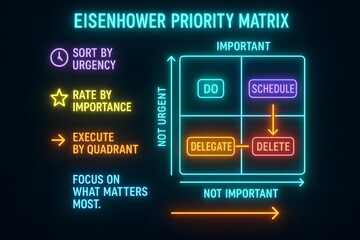
- Easy level: Important but not urgent. You already have interests in these courses, so keeping up with studying them won’t be a big deal most time. But be careful not to fall into the ditch of, “I know it already, so there’s no need to waste time studying.”
- Medium level: These are courses or subjects you literally had no idea of before you attended a classroom where you were taught, so you have a basic knowledge that now needs to gain roots by reading the text yourself. It is Important and not urgent as well.
- Difficulty level: This one is urgent and important because you need more time for tougher subjects or courses. Knowing fully well that if the lecturer calls tonight to say, “there’d be a test tomorrow”, you’d fail woefully, and they’re important in your exam, and/or carry more marks or loads.
This helps you allocate more time to subjects that truly need attention, rather than treating all subjects equally.
Don't forget to eliminate the exams you trash!
To be continued…
👉 Stay tuned and up to date with these strategies
Create your free profile on A³ (All About Admission) to access tools and updates,
👥 Join a community of students like you.
📌 Follow us on TikTok and Facebook.|| Email us at: allaboutadmission2@gmail.com
📩 Drop a comment below: what do you want to know about creating your study timetable that isn't on the list yet?
0 Comments
Please log in to leave a comment or reply.
Be the first to leave a comment!